


Solid Wood vs Engineered Wood Furniture: Which Is Better for Your Home?
When shopping for wooden furniture, one of the most common questions homeowners ask is: Should I choose solid wood or engineered wood? At first glance, both can look beautiful, stylish, and durable. But they are made differently, perform differently, and fit different lifestyles.
Understanding the difference can help you make a smarter decision, especially when choosing furniture pieces for your living room, dining area, bedroom, or entryway.

What Is Solid Wood Furniture?
Solid wood furniture is made from natural wood cut directly from trees. Common types include oak, walnut, pine, maple, acacia, mango wood, and teak. Each piece has its own natural grain, knots, tones, and character.
This is one of the biggest reasons people love solid wood. No two pieces are exactly alike. A solid wood console table, TV stand, or coffee table often feels warm, authentic, and timeless.
Solid wood is also known for its long lifespan. With proper care, it can last for years, and in many cases, it can be refinished, sanded, or repaired over time. This makes it a strong choice for homeowners who want furniture that feels permanent rather than temporary.

Discover wooden furniture for living room: Wooden TV Stands
What Is Engineered Wood Furniture?
Engineered wood is made by combining wood fibers, particles, veneers, or layers with adhesives and pressure. Common types include MDF, particle board, plywood, and veneer-covered panels.
Engineered wood is widely used in modern furniture because it is usually more affordable and can offer a smooth, consistent surface. It is especially common in painted furniture, laminated finishes, shelves, cabinets, and budget-friendly home pieces.
Some engineered wood furniture can be very practical, especially when designed well. For example, plywood can offer good strength and stability, while MDF provides a smooth surface for painted finishes. However, not all engineered wood is the same. Quality depends heavily on the material, construction, thickness, finish, and hardware.
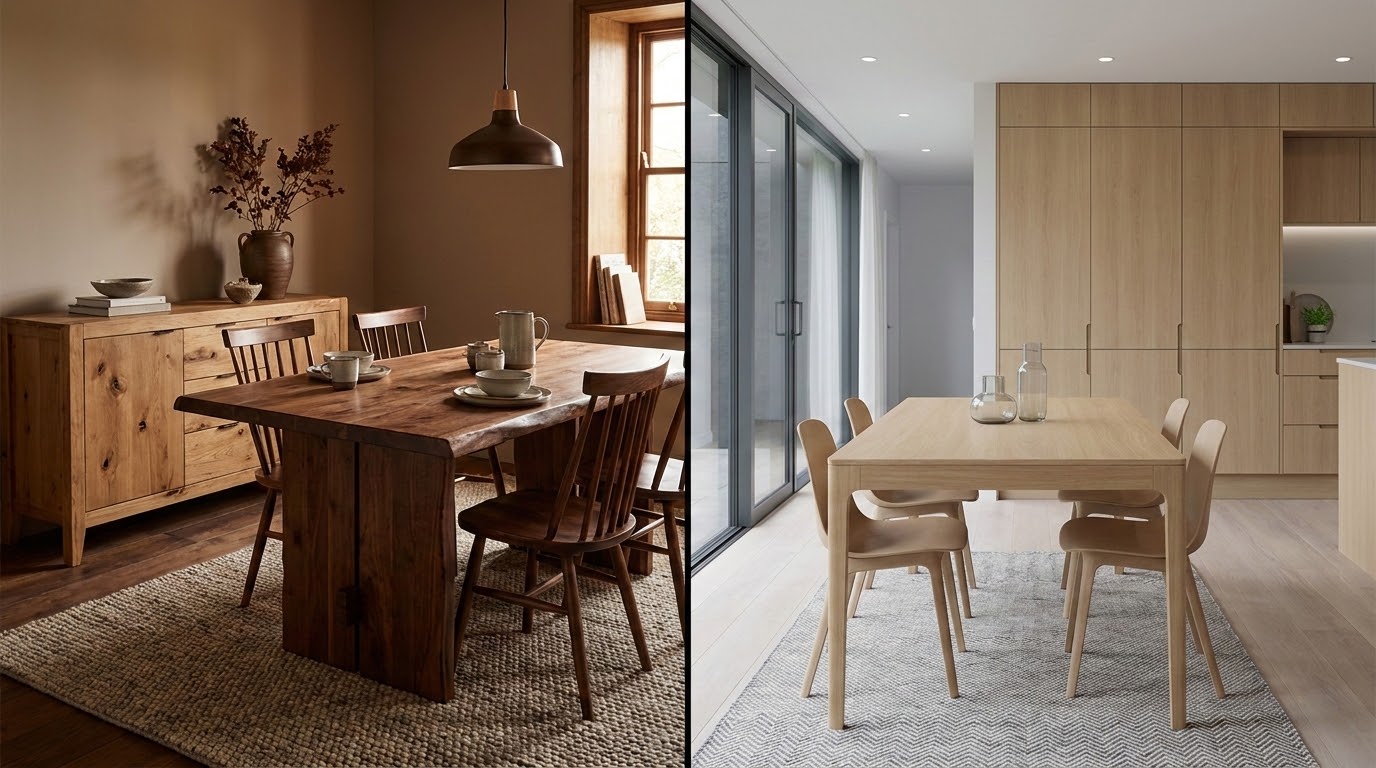

Appearance: Natural Character vs Consistent Finish
If you love natural grain, texture, and organic variation, solid wood is usually the better choice. It brings warmth and character into a room. Small imperfections, knots, and grain patterns are not flaws; they are part of the beauty.
Engineered wood often provides a more uniform look. This can be ideal for modern, minimalist, or painted furniture styles where consistency matters more than natural variation.
For a rustic, farmhouse, or warm modern interior, solid wood often adds more depth and visual interest.
Durability and Longevity
Solid wood is generally valued for durability and long-term use. It can handle daily life well when properly maintained. Scratches, dents, and marks can often be improved or repaired depending on the finish.
Engineered wood can also be durable, but it is usually more sensitive to moisture, heavy impact, and long-term wear. Particle board, in particular, may swell or weaken if exposed to water. Higher-quality plywood or veneer furniture may perform better, but it still may not offer the same repairability as solid wood.
A useful way to think about it is this: solid wood is often easier to restore, while engineered wood is often easier to replace.
Cost: Which One Is More Affordable?
Engineered wood is usually more budget-friendly. This makes it a popular option for temporary spaces, rental homes, dorm rooms, or quick room updates.
Solid wood furniture typically costs more, but it may offer better long-term value because of its durability, timeless look, and repair potential. Instead of replacing furniture every few years, many homeowners prefer investing in fewer, better pieces.
Maintenance and Care
Solid wood furniture needs basic care. Keep it away from excessive moisture, direct heat, and harsh cleaning chemicals. Use a soft cloth for dusting and clean spills quickly. Wood naturally reacts to humidity and temperature, so stable indoor conditions help protect the piece over time.
Engineered wood furniture also needs protection from moisture, especially around edges and corners. Once water gets inside low-quality engineered boards, swelling can be difficult or impossible to repair.
Which One Should You Choose?
Choose solid wood furniture if you want:
- A natural and timeless look
- Long-lasting quality
- Unique wood grain and character
- Better repair and refinishing potential
- Furniture that feels warm, substantial, and authentic
Choose engineered wood furniture if you want:
- A lower upfront cost
- A smooth, uniform finish
- Lightweight furniture
- A short-term or budget-friendly option
- Painted or laminated modern styles

Final Thoughts
Both solid wood and engineered wood can have a place in the home. The right choice depends on your budget, lifestyle, design preference, and how long you want the furniture to last.
For homeowners who value natural beauty, craftsmanship, and timeless design, solid wood remains one of the most trusted choices. It brings warmth into a space and develops character over time.
Looking for warm, timeless wooden furniture for your home? Explore our handcrafted-inspired wooden furniture collections designed to bring natural beauty into everyday living.